
In Atlanta, allergy season hits hard in spring, cold/flu sneaks in with faux winter snaps, and summer heat can bring headaches or tummy troubles. Nothing derails recovery faster than rummaging for expired meds or hunting for the thermometer at 2 a.m. with a feverish kid!
Organize your home medications before illness strikes—it's a quick project that saves time, stress, and ensures everything is safe and effective when you need it most.
Follow these updated 7 steps for a foolproof system:
Choose a Safe, Smart Storage Location Designate one main spot (or two max) to keep all household meds—fewer places means faster access.
Ideal: Cool, dry, dark drawer or cabinet in kitchen, bedroom, or hallway (avoid bathrooms/kitchens due to humidity/heat fluctuations that degrade meds).
Must-haves: Well-lit (add a motion sensitive battery light if needed for nighttime), out of reach/sight of children and pets—consider a lockable box or high shelf for safety.
Pro tip: If you have refrigerated meds (e.g., some liquids), store them separately in the fridge away from food, in a dedicated bin.
Gather, Sort, and Edit Ruthlessly Collect every medication from cabinets, purses, cars, nightstands—surprise finds are common!
Group by category: Pain relievers, cold & flu, allergies, digestion/upset stomach, first aid (bandages, antiseptics), children's vs. adult, prescriptions vs. OTC, vitamins/supplements.
Check expiration dates on everything (including sunscreen, eye drops). Toss expired, unused, or damaged items.
Keep in original containers—they preserve potency info, tamper-proof caps, and instructions. This is one of the few cases where I do NOT decant!
Dispose of Expired or Unwanted Meds Properly (FDA Guidelines) Don't just trash them—follow safe disposal to protect kids, pets, water supply, and environment.
Best: Use a local drug take-back program (most local pharmacies have a secure drop off location inside).
If unavailable: Mix non-flush-list meds with unappealing substance (used coffee grounds, cat litter, dirt), seal in a bag, throw in trash (scratch personal info off labels first).
Flush only if on FDA's Flush List (e.g., certain opioids—check fda.gov/drugdisposal). Never flush unless specified—most go in trash or take-back.
Contain & Categorize for Quick Access Use clear, stackable bins, drawer dividers, or lazy susans to keep everything contained and visible—no more rolling bottles! The more you have, the more categories you’ll need.
Separate adults/kids clearly. Label containers for each type and recipient, such as Kids’ Allergy, Adult Pain Relief.
Options: Clear bins, labeled containers with handles, clear lazy susans, or pill organizers for daily doses. Depending on the number of daily medications taken, there are plenty of multi time daily dosage containers to help with tracking what you’ve taken (or are responsible for monitoring someone else taking).
Edit/sort, measure your space, then shop, not the other way around.
Label Clearly & Add Details Labels make all the difference—even for clear bins.
Use large, easy-to-read labels by category such as Cold & Flu, Adult Pain Relief, First Aid.
Add extras: Write big expiration dates on bottle sides/bottom with a sharpie, note dosing for kids, or create a master list (print and tape inside lid) with all meds, doses, and allergies.
Stock Essentials & Build a Quick-Reference List While editing, restock basics tailored to your family (pain relievers, fever reducers, allergy meds, bandages, thermometer, antacids, etc.).
Keep a simple inventory list (digital note or printed) of what's in stock—update when you use/replenish.
Include age-specific tools (e.g., pediatric dosing syringes).
Review & Refresh Seasonally (or Biannually) Set calendar reminders: Spring (allergies), fall/winter (cold/flu), or every 6 months.
Re-check expirations, restock seasonally needed items (e.g., more allergy meds in southern spring & fall).
And while you’re updating your home wellness center, don’t forget about your travel meds as well. A quick refresh now means one less thing to have to remember when you’re packing for your next vacation.
Although I probably don’t have to mention it, I will: Pet Medicines should be stored separately from human medications. I recommend setting up a separate Pet Care area near where you store their food and grooming supplies.
A well-organized medication station means faster relief, fewer mistakes, and peace of mind—especially with little ones or groggy late nights. It’s a short, easy organization project that takes 30–60 minutes once, then just quick seasonal check-ins.
Call me if you need help.
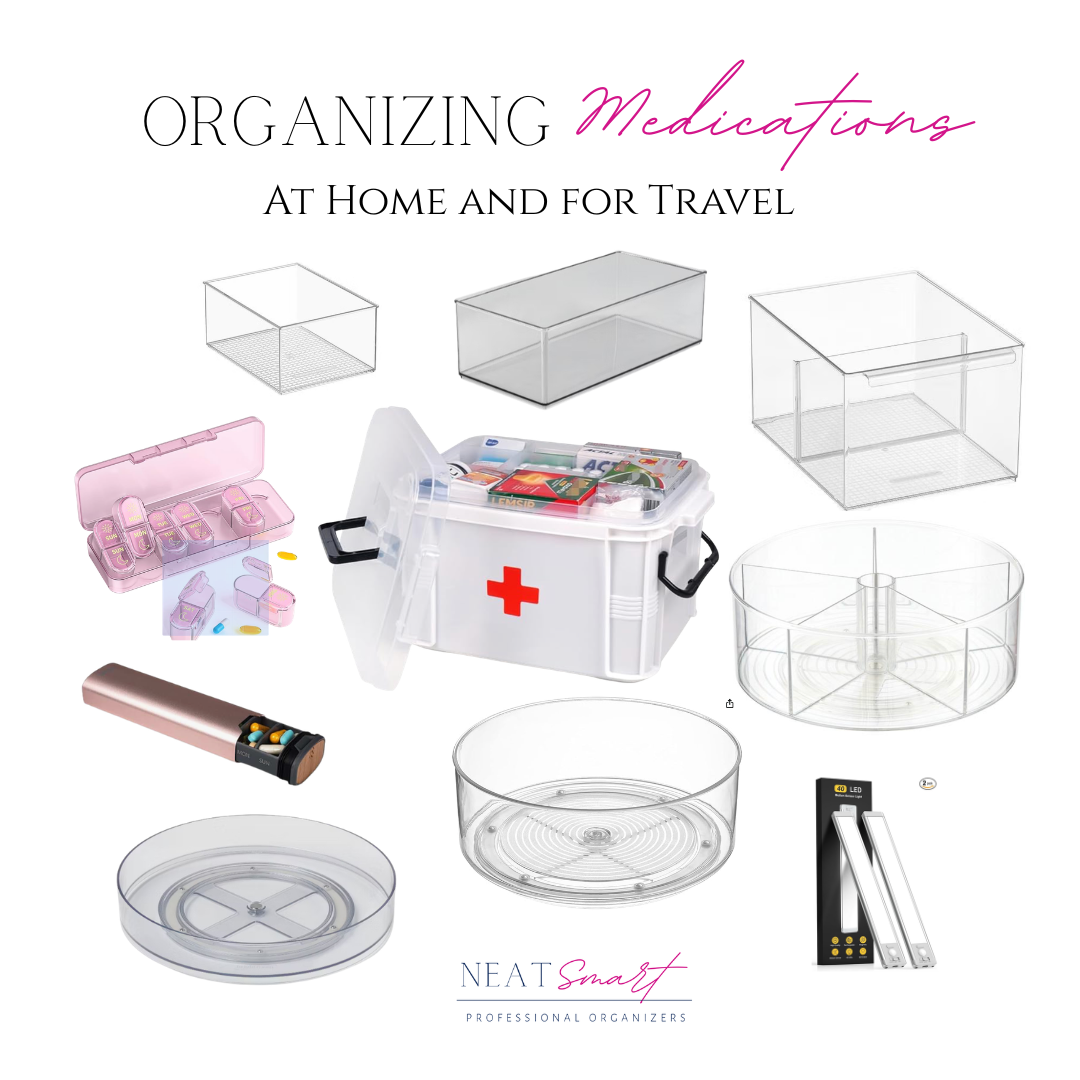
First Aid Box Clear divided lazy susan Clear 9” lazy susan 11” short lazy susan
Clear bin with handle 12” clear stackable bin Bandage Lock Box
Travel pill container 7 Day Pill Organizer
Rechargeable Motion Sensor Lights
These are affiliate links and I may earn commissions from qualifying purchases